
Going solar in the Philippines: what to understand before you commit
Smartlink Team ·
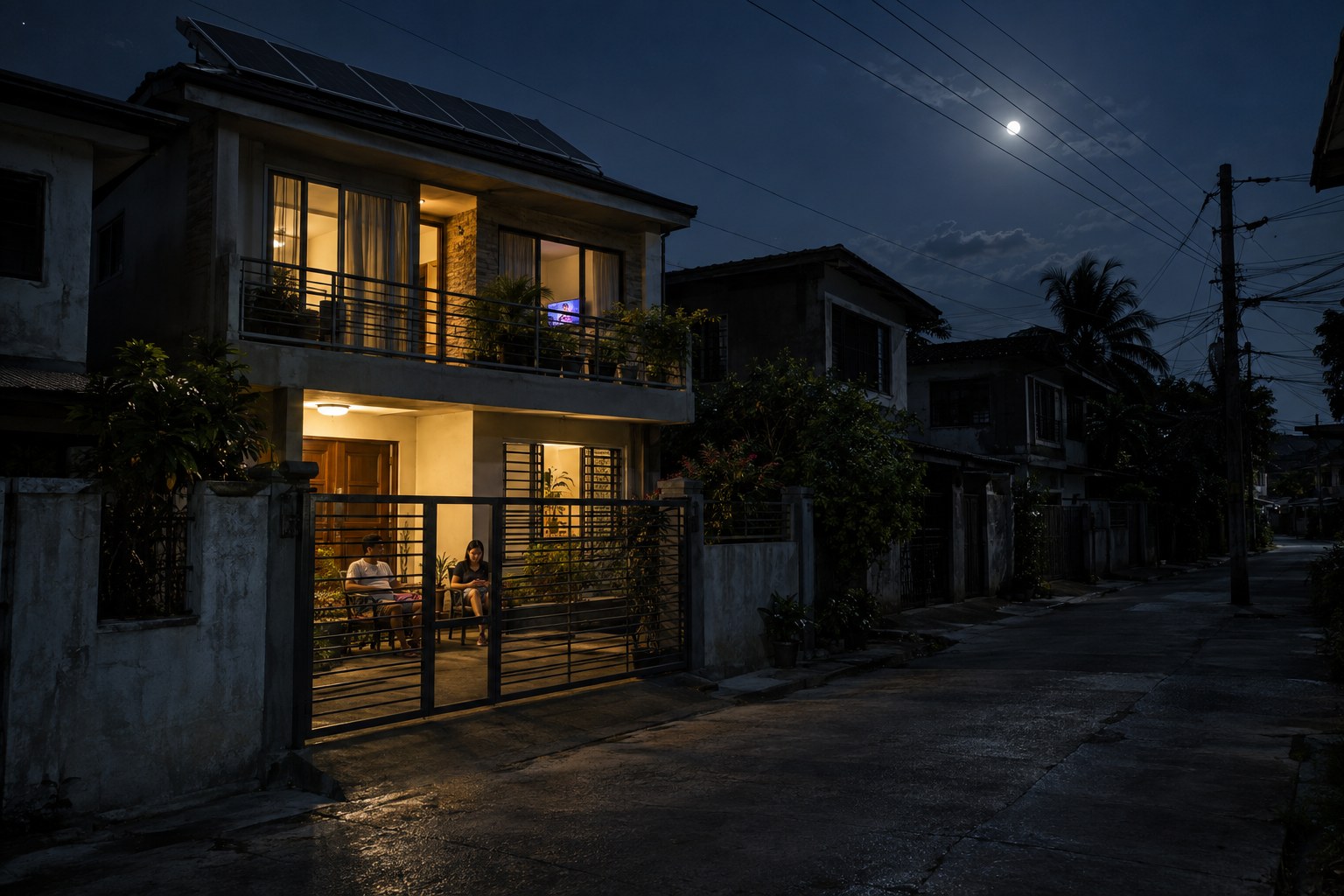
Solar is one of those decisions that looks simple from the outside. Panels go on the roof, the sun comes up, power comes out. It gets more interesting the closer you look. For a home or a business in the Philippines, the useful question is not whether solar is a good idea in general, but whether it fits how you actually use electricity. That answer starts with you, not with the equipment.
Start with how you use electricity, not with the panels
A monthly bill tells you how much you used in total, but not the shape of it. Two houses with similar bills can need very different setups. One runs most of its load in the daytime, the other switches almost everything on in the evening.
Three lists are worth writing down before anything else:
- Daytime load - air conditioning, freezers, pumps, production equipment, office computers, anything that runs while the sun is up.
- Night-time load - lighting, fans, refrigeration, security systems, whatever keeps running after dark.
- Essential load - the short list of things that must keep running during a brownout. This is usually much smaller than people expect, and it is the list that decides how much battery you may want.
Seasons matter too: consumption in the hot dry months differs from the rainy months, and so does the sunlight reaching your roof.
The three main parts of a solar setup
Most systems people ask about are built from the same handful of pieces. Knowing what each one does makes the whole conversation easier.
Solar panels
Panels, also called photovoltaic or PV modules, turn sunlight into direct current (DC) electricity. They produce most when the sun is strong and almost nothing at night, which is why the other two parts matter so much.
Batteries
Batteries store that electricity for later. They cover the evening, help carry you through a cloudy stretch, and keep essential loads running during an outage. How much storage you need depends on what you want to keep running and for how long, not on a figure quoted over the phone.
Inverter and controls
The inverter converts DC from the panels and batteries into the alternating current (AC) your appliances use. It also decides where power comes from at any given moment. Many systems include monitoring, so you can see what the panels are producing and how the batteries are holding up.
Grid-tied, hybrid and off-grid
These three terms come up constantly, and the difference between them matters more day to day than any brand name.
- Grid-tied - panels work alongside the grid with no battery storage. It is the simplest arrangement, but a grid-tied system typically shuts down when the grid goes down, so it will not carry you through a brownout.
- Hybrid - panels, batteries and the grid working together. The system draws on solar first, uses the battery when it needs to, and falls back on the grid after that. This is what many homes and businesses in the Philippines are really after, since it addresses both the bill and the outages.
- Off-grid - no utility connection at all. This suits sites the grid does not reach, such as a farm in the province or a remote facility. It needs more careful planning, because the system alone has to cover every cloudy stretch and every long night.
Some areas also allow surplus power to be sent back to the grid, which can change the arithmetic. Whether it applies to you, and what paperwork it involves, depends on your distribution utility and your location.
What decides how well solar works at your site
Two sites a few kilometres apart can behave quite differently. Shade, roof orientation, roof condition, available space and the local climate matter most.
- Shade - trees, nearby buildings, poles and water tanks can cut production more than people expect, and moving shade through the day is worse than constant shade.
- Roof condition - if the roof will need replacing soon, it makes sense to deal with that first rather than install on top of it.
- Space and heat - panels and batteries both need room, and batteries in particular dislike being boxed into a hot, unventilated corner.
- Dust, salt and heavy rain - these affect how often things need cleaning and checking.
None of this can be judged from a photo or a chat message. A site assessment is what turns general advice into something specific to your roof and your loads.
Questions worth asking before you decide
- What does the assessment cover, and who carries it out?
- How will the system behave during a brownout?
- What happens after several cloudy days in a row?
- Where will the batteries sit, and is that spot shaded and ventilated?
- Who handles the electrical work, and who signs it off?
- What monitoring comes with the system, and who reviews it?
- What routine maintenance is expected, and who does it?
- If my needs change later, can the system be extended?
What upkeep looks like
Solar is not maintenance-free, but it is not demanding either. Panels collect dust, leaves and bird droppings, and in a dusty or coastal area they will need cleaning more often. Batteries need a suitable space and some attention to how they are performing, which is where monitoring earns its keep. Anything involving the roof, the wiring or the connections should be left to a qualified professional.
On cost and quotations
Every site is different, so any honest figure depends on your loads, your roof, your battery requirements and what you want the system to do during an outage. When you ask for a quote, ask what it includes: assessment, mounting, electrical work, monitoring setup and after-sales support.
If you would like to know what is possible at your own location, Smartlink's solar service page explains how the work starts, with an energy needs and site assessment. When you are ready, you are welcome to send a message on our Facebook page, call +63 918 200 0005, or use the contact page. There is no rush, and no obligation.